Understanding Infantile Spasms and Pediatric EEG - What parents should look for

When it comes to our children, even the smallest change can feel overwhelming. A sudden movement. A strange stare. A moment that doesn’t feel quite right. As parents, we instinctively know when something feels off, even if we can’t explain it.
They call our gut our second brain for a reason, so trust it and always remember that you are your child's advocate.
For many families, that moment leads them to learning about pediatric EEGs and infantile spasms. These terms can sound scary at first, but understanding them is the first step toward getting answers and the right care.
At West Wave Neuro, we work closely with families navigating these concerns, and we know how important it is to feel informed, supported, and heard.
What Are Infantile Spasms
Infantile spasms are a specific type of seizure that
usually begin in the first year of life, often between three and twelve months of age. They can be difficult to recognize because they do not always look like typical seizures.
Not all seizures look the same!
Spasms may appear as:
Brief stiffening or jerking of the arms or legs
Sudden head drops
Clusters of quick movements
Subtle body crunching or bending forward
Episodes that happen upon waking or falling asleep
Because these movements can be subtle, they are sometimes mistaken for reflux, startle reflexes, or normal baby movements.
However, infantile spasms are a serious condition that require prompt evaluation and treatment.
.
Why Early Detection Matters
The infant brain is developing rapidly. When abnormal electrical activity is present, it can interfere with development if left untreated.
Early diagnosis and treatment of infantile spasms can:
Improve developmental outcomes
Reduce the risk of long term neurological complications
Help prevent future seizure disorders
Provide clarity and direction for families
This is why EEG testing is so important when spasms or unusual movements are suspected.
What Is a Pediatric EEG
An EEG, or electroencephalogram, is a test that records the brain’s electrical activity. In children and infants, EEGs are used to help evaluate how the brain is functioning and whether there are any abnormal patterns that could explain certain symptoms.
EEG testing is:
Safe
Non invasive
Painless
Does not use radiation
Safe for newborns and infants
Small sensors are placed on the scalp to record brain activity in real time. The test simply monitors the brain’s signals. Nothing is sent into the body.
Because children’s brains are still developing, EEGs play an important role in identifying early neurological concerns that may not be visible on imaging alone.
How EEG Helps Diagnose Infantile Spasms
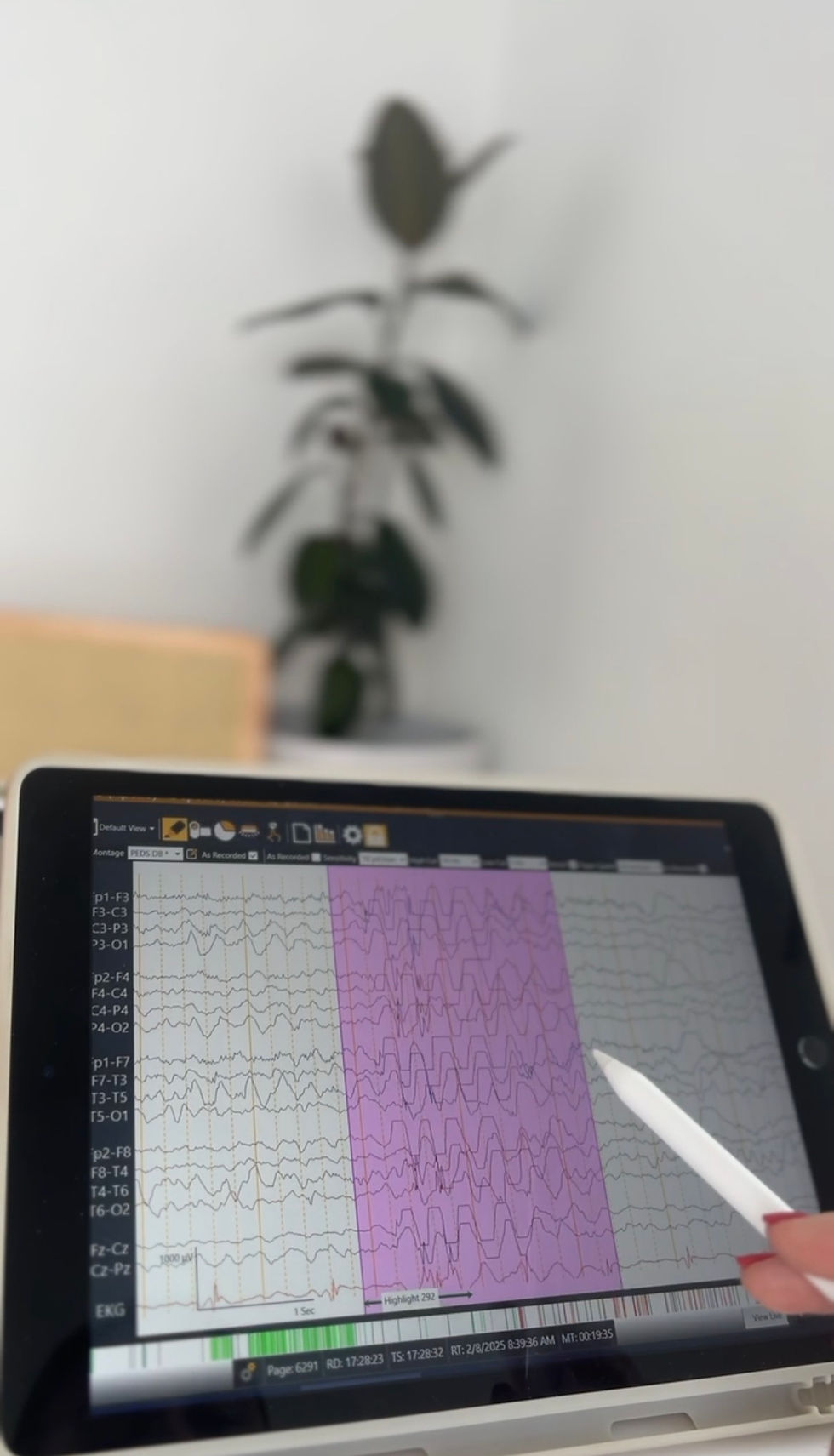
EEG is the gold standard test for diagnosing infantile spasms.
During the EEG, providers look for specific electrical patterns in the brain that are associated with this condition. Some abnormalities may only appear during sleep or over longer monitoring periods, which is why extended EEG studies are often recommended.
At West Wave Neuro, we specialize in pediatric EEG monitoring, including long term studies that allow us to capture brain activity over time in a comfortable environment.
This real world monitoring is often critical in making an accurate diagnosis.
We work with major facilities such as Cottage Hospital to assist in this specific type of monitoring for adult and pediatric patients.
Why Long Term EEG Is Sometimes Needed
A short EEG may not always capture abnormal activity, especially if spasms occur intermittently or during sleep.
Long term EEG monitoring allows:
Observation of brain activity over many hours or days
Correlation of events with EEG changes
More accurate diagnosis
Better treatment planning
For infants and young children, this type of monitoring can make a significant difference in identifying what is truly happening.
Trusting Your Instincts as a Parent
One of the most important things we tell parents is this:
If something feels off, trust that instinct.
You know your child better than anyone. If movements seem unusual, development seems delayed, or episodes keep happening without explanation, it is okay to push for further evaluation.
Many parents of children with infantile spasms say they knew something was wrong before anyone else did.
You are not overreacting. You are advocating. We are so proud of you!
Our Commitment to Families
At West Wave Neuro, we understand how emotional and overwhelming this process can be. Our team is experienced in pediatric EEG monitoring and works closely with families to provide compassionate, thorough care.
We believe in:
Gentle, child centered testing
Clear communication with families
Timely results
Supporting parents every step of the way
Your child’s health matters, and so does your peace of mind.

We are here for you!
Infantile spasms and pediatric neurological concerns can feel frightening, but early detection and proper evaluation make a meaningful difference.
EEG is a safe, reliable tool that helps us understand how a child’s brain is functioning and guides the next steps in care.
If you have concerns about your child’s movements, development, or behavior, trust your instincts and seek evaluation. Sometimes the smallest signs lead to the most important answers.
At West Wave Neuro, we are here to help protect what matters most. Our little hearts deserve nothing less.
Disclaimer:
This content is for educational purposes only and does not constitute medical advice. It is not intended to diagnose, treat, cure, or prevent any disease. Always seek the advice of a qualified healthcare professional with any questions regarding a medical condition.
Comments